12 Badness Backgrounds Pack 1: Elevate Your Creative Projects
What Makes This Background Pack Stand Out?
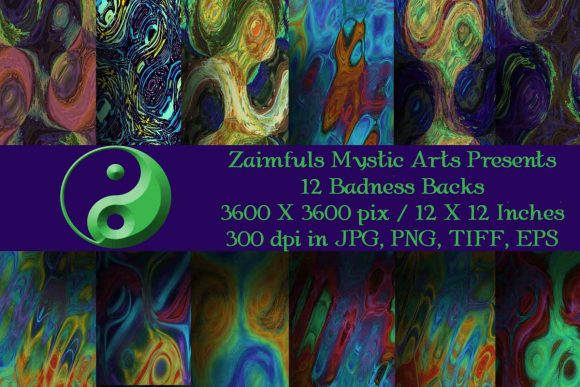
Every designer hits a wall sometimes. You open a blank canvas, stare at it for twenty minutes, and realize you need something more than a solid color or generic gradient. That's where 12 Badness Backgrounds Pack 1 from Zaimfuls Mystic Arts enters the picture. This collection delivers twelve distinct high-resolution backgrounds designed to inject personality, depth, and visual interest into a wide range of projects.
Each image in the pack measures 3600×3600 pixels at 300 dpi, which translates to a crisp 12×12 inch print at full resolution. The files come in JPG, TIFF, EPS, and PNG formats, giving you flexibility depending on your software and workflow. Whether you're working in Adobe Illustrator, Photoshop, Canva, or Procreate, these formats cover the bases. The PNG files with transparency support layering, while EPS vectors scale without quality loss for larger print runs.
Visually, the backgrounds carry a bold, textured aesthetic. They lean into rich color palettes and layered compositions that feel handcrafted rather than algorithmically generated. There's an organic quality to the patterns — they don't look like something you'd find in a default template library. Each background has its own mood and character, which means you're not getting twelve slight variations of the same thing. You're getting twelve distinct starting points for your next project.
Where These Backgrounds Actually Work Best
Let's get practical. A background pack is only as useful as the number of ways you can actually deploy it. Here's where 12 Badness Backgrounds Pack 1 earns its place in a designer's asset library.
Digital Design and Web Projects
Blog headers, website hero sections, and landing page backgrounds all benefit from textured, high-quality imagery. A plain white background works for minimalism, but when your brand calls for warmth, edge, or visual storytelling, a well-chosen background sets the tone immediately. These images work particularly well behind text overlays in social media graphics — think Instagram story templates, Pinterest pins, and Facebook cover images. The 12×12 inch square format aligns perfectly with Instagram's native dimensions, which saves you cropping headaches.
Phone and tablet wallpapers represent another straightforward application. If you run a digital shop or create content for a community, offering customized device backgrounds as free downloads or bonuses builds goodwill and keeps your brand visible on screens people check dozens of times daily.
Print and Physical Products
The 300 dpi resolution matters here. Low-resolution images fall apart in print, producing muddy, pixelated results that cheapen your brand. These backgrounds hold up cleanly on physical products. Mug wraps, t-shirt prints, wall art posters, sticker sheets, and quote cards all benefit from backgrounds that maintain their detail and color accuracy at print size.
For crafters running Etsy shops or small business owners producing branded merchandise, having reliable, print-ready design assets eliminates a major production bottleneck. You don't need to commission custom artwork for every product line. A well-curated background library lets you create cohesive product collections efficiently.
Editorial and Publishing Work
Magazine layouts, book covers, newsletter designs, and digital publications all rely on strong visual foundations. A textured background behind a chapter title or section header adds editorial polish without overwhelming the content. Pair one of these backgrounds with a clean sans serif font for body text, and you've got a professional reading experience that feels intentional.
Publishers and content creators working on digital journals, planners, or printable worksheets will find the pack especially useful. The backgrounds serve as decorative page foundations that make ordinary documents feel like premium products.
How Backgrounds Influence Perception and Engagement
Backgrounds do more than fill empty space. They shape how people feel about your content before they read a single word. A gritty, textured background signals authenticity and edge. A richly layered one suggests creativity and depth. This is fundamental to brand identity — every visual choice communicates something about who you are and who you're speaking to.
Visual hierarchy depends heavily on background selection. If your background competes with your foreground content, you lose clarity. The best backgrounds complement your typography, imagery, and messaging without stealing attention. When working with 12 Badness Backgrounds Pack 1, consider adjusting opacity, applying color overlays, or using selective cropping to control how dominant the background feels in your composition.
Consistency across touchpoints builds recognition. If you use these backgrounds across your social media graphics, email headers, product packaging, and website, you create a visual thread that ties everything together. People start recognizing your aesthetic before they even see your logo. That kind of recognition doesn't happen by accident — it comes from deliberate, repeated use of cohesive design assets.
Working With Multiple File Formats
The inclusion of JPG, TIFF, EPS, and PNG formats might seem like overkill, but each serves a real purpose in different workflows.
- JPG files work well for web use, social media uploads, and quick mockups where file size matters.
- TIFF files preserve maximum quality for print production and archival storage.
- EPS files give vector-editing software like Illustrator the ability to scale and modify elements without resolution loss.
- PNG files support transparency, making them ideal for layering in design software.
Having all four means you won't waste time converting files or compromising on quality depending on your output medium. It's a small detail that saves real time across a project lifecycle.
Choosing the Right Background for Your Project
Not every background fits every project. Here's a straightforward approach to evaluating fit.
- Define your project's mood first. Before browsing the pack, write down three adjectives that describe the feeling you want to create. Match those against the backgrounds.
- Test with your actual content. Drop your text, logo, or product mockup onto the background before committing. What looks beautiful in isolation might clash with your specific colors or typography.
- Consider your audience. A background that works for a music festival poster won't necessarily work for a financial services brochure. Context matters.
- Check readability at multiple sizes. View your design on a phone screen, a tablet, and a desktop monitor. Print a test page if your project involves physical output. Readability issues that look minor on a large screen become dealbreakers on smaller ones.
When it comes to font pairing, textured backgrounds generally work best with clean, legible typefaces. A bold display font for headlines paired with a straightforward sans serif font for supporting text creates contrast that reads well against complex backgrounds. Avoid overly ornate script fonts or detailed handwritten fonts directly on top of busy backgrounds — the visual noise makes everything harder to read.
Commercial Use and Licensing Considerations
Before using any design asset in commercial projects, review the licensing terms carefully. Most premium background packs from reputable sellers include commercial licenses that cover products for sale, client work, and marketing materials. However, redistribution of the raw files — selling the backgrounds themselves as standalone products — typically isn't permitted.
For small business owners and entrepreneurs, this distinction matters. You can use 12 Badness Backgrounds Pack 1 in your product designs, social media campaigns, branded merchandise, and client deliverables. What you can't do is package the backgrounds and sell them as your own asset collection. Understanding this boundary protects you legally and respects the original creator's work.
Final Thoughts on Building a Reliable Asset Library
Professional designers and content creators treat their asset libraries like tools. You wouldn't show up to a job site with one wrench, and you shouldn't build creative projects with a single default background. Curating a small, high-quality collection of premium font families, background packs, textures, and graphic elements gives you the flexibility to respond to different briefs, audiences, and platforms without starting from scratch every time.
12 Badness Backgrounds Pack 1 fits into that philosophy. It's not trying to be everything — it's offering twelve strong, versatile backgrounds with the technical specs and format variety that real-world projects demand. Whether you're designing a brand identity system, building out a social media content calendar, producing printed merchandise, or crafting digital publications, having dependable background assets ready to deploy keeps your work moving forward.
The best creative work happens when your tools stay out of the way and let your ideas lead. A solid background pack does exactly that — it gives you a foundation so you can focus on everything else that makes your project yours.